
What is Trauma? Understanding its Impact on Your Life
Trauma is a topic that has gained significant attention in recent years. Whether through personal experiences or societal discussions, we are increasingly recognizing how deeply trauma can shape our lives. But what exactly is trauma? And how can therapy help us heal from its effects?
Trauma: An Overwhelming Threat

Trauma is an overwhelming threat, one that we are not prepared to handle. It can stem from prolonged neglect, emotional or physical abuse, accidents, or other distressing experiences. When faced with trauma, our natural response is often to detach from what is happening as a way to cope. If these experiences are ongoing or frequent, we can become stuck in a cycle of fight, flight, freeze, or fawn responses.
Initially, these automatic stress reactions are highly effective for survival. However, if we continue to isolate ourselves from the trauma, we cannot fully process the experience. As Bessel van der Kolk describes in his book The Body Keeps the Score, unresolved trauma lingers in our bodies and minds, affecting our ability to function. When we distance ourselves from past traumatic experiences, it often means we still feel threatened. While this distance can feel necessary, the unresolved trauma continues to exert power over us.
But how does trauma actually affect the brain? Let’s explore what happens when the brain stores traumatic memories.
How Trauma Affects the Brain
Imagine accidentally downloading a corrupted file onto your computer. This file disrupts the processor and impairs the entire system’s functionality. Sometimes the impact is immediate; other times, it becomes apparent later that the system’s database has been altered. If we don’t occasionally clean the system, it may eventually freeze or shut down. Similarly, trauma can act like corrupted files in our brain.
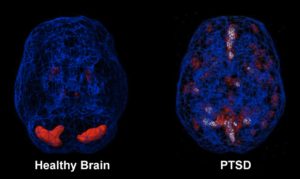
Just like a corrupted file disrupts a computer, trauma disrupts the brain’s ability to process memories normally. This is why traumatic memories can feel fragmented or overwhelming.
Some of this fragmented material remains in short-term memory, making it difficult for the brain to recognize that the danger has passed. Symptoms like flashbacks or anxiety can persist and become chronic.
Brain scans of individuals with PTSD show overactivity in the limbic system, even years after the traumatic event.
The Stress Response System: Fight, Flight, Fawn, or Freeze
In ‘trauma mode’, part of the brain remains in a heightened state of alert. This can lead to misinterpreted cues and overestimated danger. Due to our evolutionary need to survive, the emotional brain assumes danger until safety is proven. It reacts with a specific stress response: fight, flight, fawn, or freeze. And sometimes an exhausting cycle of all four.
These stress responses are activated automatically, within 200 milliseconds if necessary. The ‘thinking brain’, on the other hand, lags a few seconds behind when a stress response is triggered. That’s why, when our brain perceives a threat, we sometimes make impulsive decisions instead of smart ones.
Trauma can manifest in different ways depending on how your brain responds to stress. Below are common symptoms associated with each stress response:
Examples of symptoms during stress response activation:
| FIGHT | FLIGHT |
| Irritability | Avoidance |
| Loss of Temper | Addictions |
| Defensiveness | Impulsivity |
| GREEN ZONE: Here, we feel safe and relaxed, able to learn and connect with others. | |
| FAWN | FREEZE |
| Auto Pilot | Disconnected |
| Over-Compliance | Memory Loss |
| Giving Up Easily | Shut Down (also: Fainting) |
When these stress responses become chronic, they can create a cycle of unresolved trauma that affects every aspect of life.
The Cycle of Unresolved Trauma
Neural pathways in the brain function similarly to muscles, they grow stronger and more efficient with repeated use. The more often the stress response system is activated, the more it develops. Experiencing complex trauma or a cascade of traumatic events often leads to an overdeveloped and overly reactive stress response system. This can result in dissatisfying social interactions, maladaptive beliefs about oneself and others, overwhelming emotions, and problematic behaviors.
In this way, unresolved trauma can lead to more trauma, affecting both ourselves and others. Unfortunately, the brain’s preference for familiar patterns can further exacerbate this cycle and lead to the chronification of maladaptive behaviors and beliefs. This can be seen particularly in dysfunctional relationship patterns such as trauma bonding, in which a person remains emotionally attached to someone who repeatedly harms or exploits them.
While this cycle can feel overwhelming, trauma therapy is designed to help you break free from it. By reprocessing traumatic experiences in a safe environment, you can reduce their power over you.
How Trauma Changes the Brain and Body
Beyond straining interpersonal relationships, an overdeveloped stress response system can also cause physical stress. The increased release of stress hormones, such as adrenaline or cortisol, can contribute to illnesses like diabetes or heart conditions.
In some cases, trauma can lead to feelings of powerlessness, fear, or disorganization. If these emotional states are experienced repeatedly or over extended periods, they can develop into personality traits. This may manifest as personality disorders or a disorganized attachment style.
The good news? Trauma therapy offers a way to break this cycle and reclaim your sense of safety and control. Here’s how trauma therapy can help.
What Is Trauma Therapy? A Path to Healing
Trauma therapy is a specialized form of therapy designed to help individuals process and heal from overwhelming or distressing experiences. Unlike traditional talk therapy, trauma therapy often incorporates techniques that address both the emotional and physical effects of trauma. This can include evidence-based methods like EMDR (Eye Movement Desensitization and Reprocessing), trauma-focused CBT, or somatic therapies, which help the brain reprocess traumatic memories in a safe and controlled way.
The goal of trauma therapy is not just to reduce symptoms like anxiety, flashbacks, or avoidance behaviors, but to help you regain a sense of control, safety, and empowerment. Whether you’re dealing with the aftermath of a single traumatic event or the effects of complex trauma, chronic stress or neglect, trauma therapy provides tools to help you move forward. Over time, many people find they can develop new strengths and build a deeper sense of meaning in their lives. Trauma can become a source of personal growth, allowing you to approach life with renewed confidence and purpose.
Facing Trauma Together: A Safe and Guided Process
Trauma can feel overwhelming, especially when facing it alone. Therapy provides a safe, supportive environment where you can explore your experiences at a pace that feels right for you. There is always space to pause, regulate, and ground yourself whenever needed, ensuring you never feel pushed beyond what you can handle.
The process is guided and structured, designed to help your brain review and integrate what it couldn’t process when the trauma occurred. With evidence-based methods, the therapist supports you in gently reprocessing traumatic memories, reducing their emotional charge, and allowing you to move forward with greater clarity and ease.
Do You Have Trauma Symptoms? Take the Test!
If you’re curious whether you might be experiencing trauma symptoms, take this quick self-assessment test. It’s a great first step toward understanding your experiences and exploring how therapy can help.
